Word of Osbourne’s death came weeks after he reunited with his original Black Sabbath bandmates.
Ozzy Osbourne, the wailing Black Sabbath singer-turned-solo act who took the “Crazy Train” from a bleak childhood in working-class Birmingham, England, to heavy metal stardom, has died.
He was 76.
His family announced the rock legend’s passing in a statement: “It is with more sadness than mere words can convey that we have to report that our beloved Ozzy Osbourne has passed away this morning. He was with his family and surrounded by love. We ask everyone to respect our family privacy at this time.”
Word of Osbourne’s demise came more than two weeks after the ailing frontman reunited with his original Black Sabbath bandmates Tony Iommi, Geezer Butler and Bill Ward for a triumphant final show on July 5.
Shortly after Osbourne’s death was announced, a two-word tribute appeared on the official Facebook page of Black Sabath: “Ozzy Forever.”
Black Sabbath’s final show was witnessed by 45,000 fans packing Birmingham’s Villa Park soccer stadium and by 5.8 million more metalheads around the world who watched online.
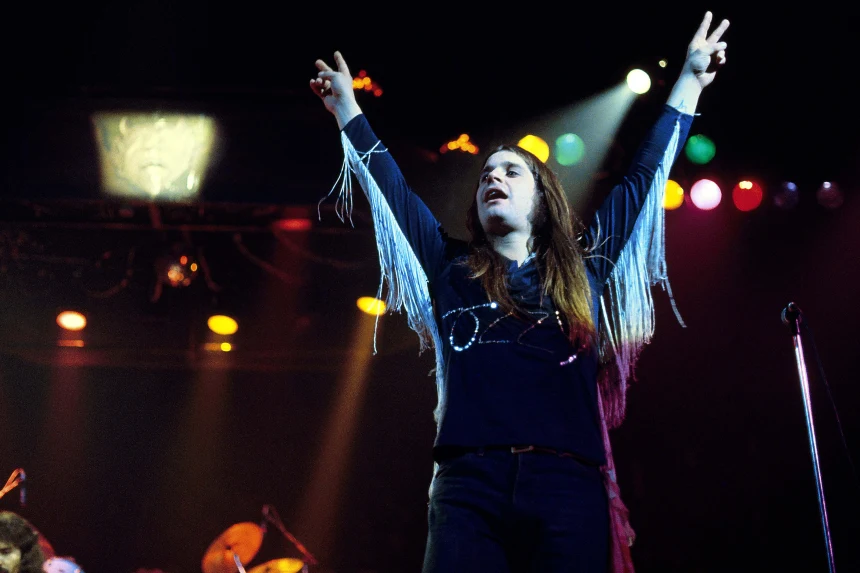
“You’ve got no idea how I feel,” Osbourne said, sitting on a leather throne because he could no longer stand, his mascara smeared by tears. “Thank you from the bottom of my heart.”
Osbourne’s wife, TV personality Sharon Osbourne, revealed in February that Ozzy was unable to walk because of Parkinson’s disease, but that the diagnosis “doesn’t affect his voice.”
Dubbed the “Prince of Darkness,” Osbourne managed to muscle through four of Sabbath’s most iconic number: “War Pigs,” “NIB,” “Iron Man” and perhaps the band’s biggest hit, “Paranoid.”
Bands that are direct musical descendants of Black Sabbath like Metallica, Slayer and Alice in Chains, as well as performers like Ronnie Wood of The Rolling Stones, completed the metal marathon by cranking out covers from Black Sabbath’s catalog or Osbourne’s solo career.
It was no secret that Osbourne had been sick for some time. He Osborne opened up about his battles with Parkinson’s disease and repeated spinal surgeries in a November 2023 interview with Rolling Stone magazine.
“I’m taking it one day at a time, and if I can perform again, I will,” the then 74-year-old singer said.
Osbourne acknowledged that the epic amount of drugs and alcohol he ingested early on in his career had taken a toll on his health. And he credited his wife with repeatedly saving his “arse.”
“I do count my lucky stars,” Osbourne told the magazine. “I don’t know why I’m still here and I do sometimes think I’m on borrowed time. I said to Sharon the other day, ‘What a great f—–g life we’ve had and what a great f—–g experience.’”
John Michael Osbourne was born Dec. 3, 1948, in Birmingham, the fourth of six children of a poor family. There was little to indicate that he would amount to anything — much less become an idol to millions.
Osbourne, who struggled with dyslexia, dropped out of school at 15 to work a series of menial factory jobs, including toiling in a slaughterhouse and testing car horns. He also served a brief stint in prison for burglary.
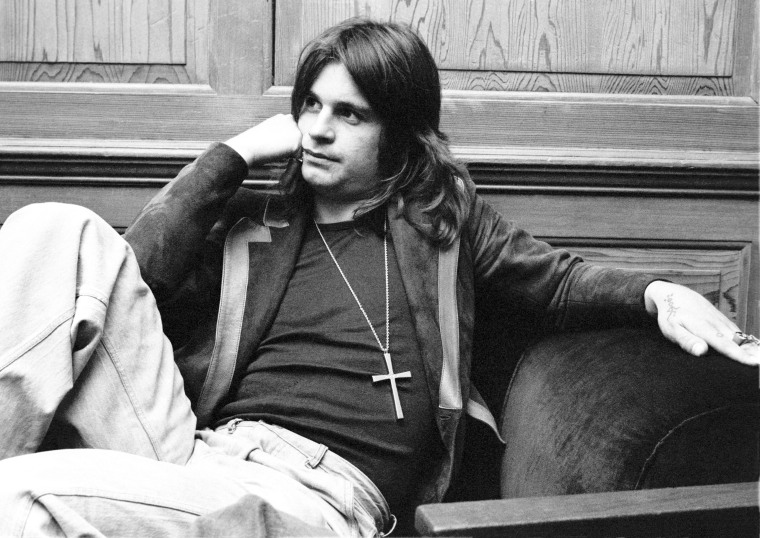
Osbourne wasn’t exactly planning to rock the world when he started singing at local clubs. In 1968, he joined a band in need of a frontman called the Polka Tulk Blues Band, which was then comprised of Iommi, Butler and Ward.
They changed their name to Earth. But as their sound turned heavier and their lyrics delved into horror and the occult, they opted for yet another name change, inspired by the title of a Boris Karloff film: “Black Sabbath.”
“Black Sabbath wasn’t a band that was created by some big mogul guy,” Osbourne told the BBC in 2017. “It was four guys who went, ‘Let’s have a go.’ We had a dream and it came true beyond our wildest expectations.”
“I remember playing in the Crown Pub in Birmingham and thinking, ‘This will be good for a couple of years, drink a few beers and have a jam.’”
The ride lasted considerably longer.
Their 1970 self-titled debut album hit the top 10 in the U.K. and No. 23 on the U.S. charts. A year later, their second album, “Paranoid,” topped the charts in the U.K. and reached No. 12 across the pond.