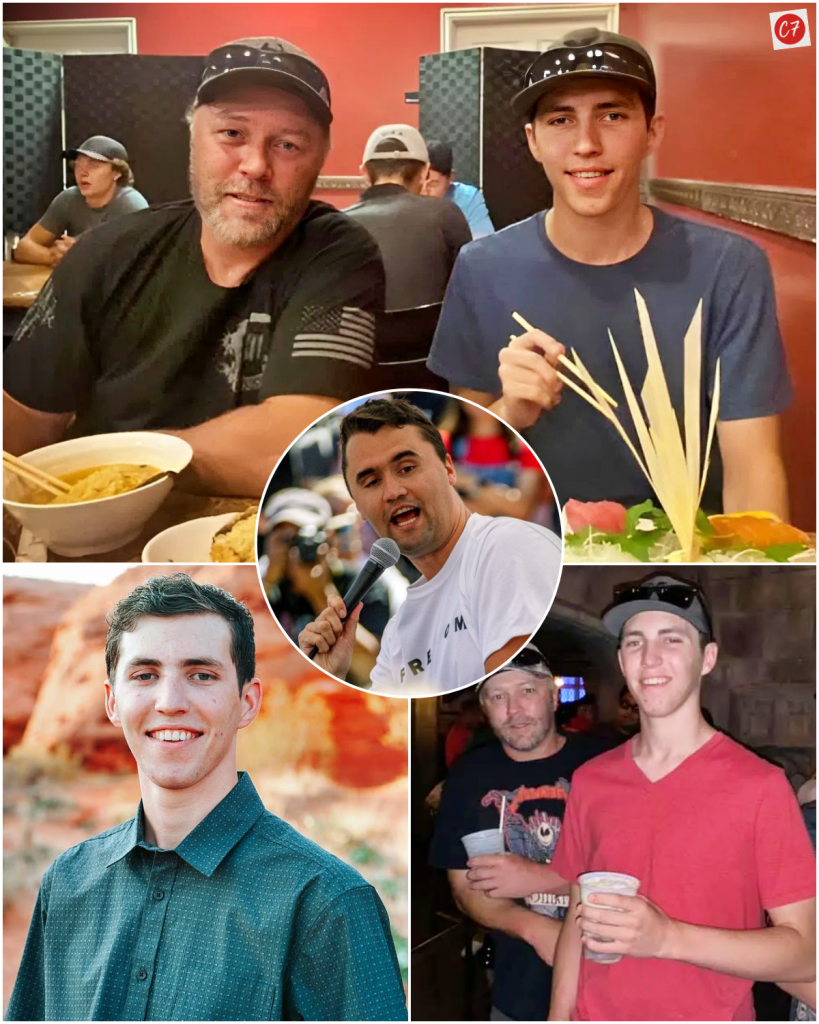
The moment 22-year-old Tyler Robinson appeared, the noise stopped. Reporters who had been shouting questions seconds earlier fell silent. Camera shutters clicked unevenly, hesitant, as if even the machines understood the weight of the moment. For a few frozen seconds, America held its breath.
It was not simply the sight of a suspect in custody. It was the collision of two worlds—law and blood, duty and family. The young man now at the center of a national storm was the son of a man who had spent nearly three decades enforcing justice.
Behind that image lay a darker truth. A destined signal in the dark night.
According to state officials, Robinson agreed to surrender after a private call with his father late at night. Local outlets reported fragments of that call, describing a man’s voice cracking under the weight of love and duty. It was not the voice of an officer commanding a suspect. It was the voice of a father pleading with his son.
Neighbors familiar with the family said the father looked exhausted that night, pacing the small living room, phone pressed to his ear. His hand shook as he spoke—the same hand that had once signed arrest reports and held the shoulders of criminals.

“Son…” he reportedly began, his tone breaking. “I’ve stood beside justice my whole life. Don’t make me carry this shame to the grave. Step out. Don’t force me to choose between you and justice.”
For a long moment, there was silence on the line. No reply. Just the hollow sound of breath and the ticking of a clock.
Finally, a whisper. Not loud, not clear, but enough: “…Alright.”
That was the moment. The decision was not made in a courtroom. It was not the result of handcuffs or sirens. It was born in a midnight phone call between father and son.
Sources close to the investigation said Robinson kept his voice low, almost defeated. The father, described by neighbors as a man of rigid discipline, slumped into a chair after hanging up. Twenty-seven years as a police officer had taught him how to face criminals, how to stand tall under pressure. Nothing had prepared him for this.

That very moment turned the father’s heart into the heaviest sentence.
Witnesses later said he looked like a man twice his age, shoulders bent, his face hollow. He had fought strangers, he had stared down danger, but nothing compared to asking his own son to walk into the light.
And then came the words. The words that stopped short, the words that still circle through headlines.
“I taught him about justice…”
He did not finish the sentence. He could not. The thought crumbled in his throat, leaving only silence.
For the public, those words became a symbol. For the family, they were a wound. This was no longer a man of the law speaking. This was a father crushed by the very values he had upheld his entire life.
Before the world saw Tyler Robinson step into the light, before the nation froze at his appearance, there was only that phone call, that whisper, and that half-finished sentence from a father standing on the thin line between justice and love.

The silence of that phone call did not end when the line went dead. Inside the house, Tyler reportedly sat on the edge of his bed for nearly a minute, staring at the door. His hands shook, his breathing uneven. Every second felt stretched, every sound in the room amplified—the creak of the floorboards, the hum of the refrigerator, the echo of his father’s words.
And then, he moved.
Witnesses later told local reporters they saw the door creak open. Light from the hallway spilled into the dark, cutting across his pale face. He looked drained, like someone who had surrendered long before he stepped outside.
Waiting for him was not only the officers. Waiting for him was his father.
Neighbors said the father walked a step behind, close enough to guide but never forcing. His hand hovered near his son’s back, steady but trembling. It was not the push of an officer. It was the weight of a parent who knew there was no other path.
The street outside had grown tense. Word of an imminent arrest had spread, and people gathered quietly. Some leaned against fences. Others clutched coffee mugs or crossed their arms, eyes fixed on the house. Children peeked from behind curtains. Nobody spoke louder than a whisper.
Phones were already raised. According to social media posts reviewed by local outlets, clips of the moment began appearing online within minutes. The footage was shaky, blurry in parts, but the image was unmistakable: a young man walking into the light, and a father behind him, head lowered.
For those who lived on that street, the scene was almost too heavy to watch. For the father, it was unbearable.
He had once been the man who enforced justice, who reassured others that order would prevail. Now, he was the man delivering his own son to the very system he had sworn to uphold.
One neighbor recalled hearing him murmur as Tyler stepped forward:
“I taught him about justice, but tonight justice took him from my arms.”
The words were not shouted. They slipped into the night air, carried on a voice breaking under the strain of love and law. To those close enough to hear, the effect was chilling.
A woman across the street told reporters: “It wasn’t anger in his voice. It was grief. Like his whole soul cracked open.”
The officers did not drag Tyler. They did not need to. He walked willingly, shoulders slumped, eyes down. He did not fight, did not look back. The only thing pushing him forward was the presence of the man behind him—his father.
When the handover was complete, when the officers formally took custody, witnesses said the father’s hands shook so violently he clasped them together. His face, usually composed and stern, seemed frozen in a mask of devastation.

A man who had spent twenty-seven years arresting strangers was now delivering his own blood.
The image spread with frightening speed. Local media outlets confirmed that short clips of the arrest were circulating widely online, shared thousands of times within hours. Hashtags like #TylerRobinson and #Justice began trending late in the night.
Reactions were immediate and divided. Some praised the father as a man of integrity: “A hero who stood for justice, even when it cost him everything.” Others accused him of betrayal: “How could he hand over his own son?”
But beneath the noise, one image remained: a bowed head, a trembling hand, and a son walking into the light.
In living rooms, in diners, in offices still lit after midnight, people replayed the clip, searching for meaning. Was it courage? Was it love? Or was it the unbearable truth that justice spares no one—not even those who had spent a lifetime serving it?
The silence that followed has already frozen millions, leaving a nation staring at a story too heavy to escape.